The Story

From a corner in Loíza to Madison Square Garden and back home again.

Twenty-two scenes across three timelines — Loíza now, 1962, the world tour, and the Madison Square Garden moment when the machines fail and only one mic survives. Click any scene to read what happens, see every visual beat, and meet the company in that moment.

A boy from Loíza becomes the biggest artist in the world — and discovers his own royalties are paying to bulldoze his mother's house.

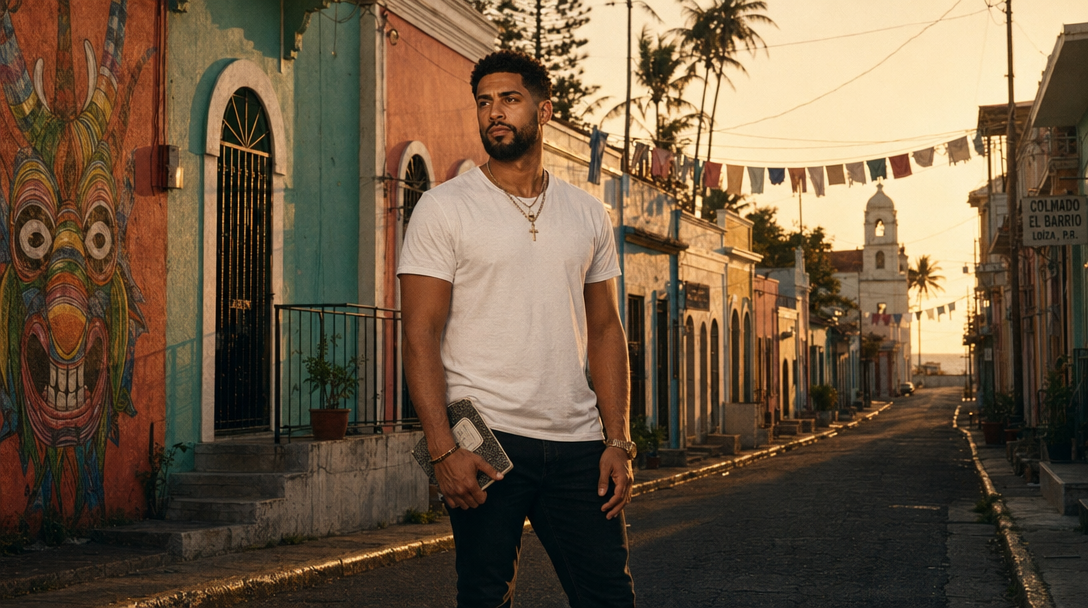
VATO-X is a two-act Broadway musical about Xavier Rosario Figueroa, a kid from Loíza, Puerto Rico who carries a bomba pattern — tun-tu-tun-pa, tun — from his grandmother's balcony to the floor of Madison Square Garden, and back home again.

The story moves across three timelines at once — the Loíza of now, the Loíza of 1962, and the global tour Xavier folds himself into — tracing how Puerto Rican roots became the global beat, and what it costs an artist to learn the song was never his alone.

Seven years into the Vato-X persona, he discovers two things on the same night: in the Atlantic-Universal merger he signed without reading, his masters and publishing were assigned away — he doesn't own his own catalog; and his royalties have been quietly routed through Coastal Capital Partners into Caribbean Dreams, the gentrification project tearing down his mother's block, where his estranged father swings a hammer for a paycheck.

Thirty minutes before MSG showtime, Atlantic remote-locks his playback rig as brand insurance against an artist gone off-script. Xavier walks out with one wired mic and a recording of his grandfather's barril, sings the show's anthem acoustic to twenty thousand people, names the contract clause and the development on a livestream that hits 4 million witnesses, and announces he is moving the show home.

By 6 AM, in a permits-suspended dawn concert in Loíza, the barrio sings the anthem back to him verse by verse — and the world finally hears the source, not because Xavier sold it, but because he came home and brought the rhythm with him.
Loíza, 1962
Loíza · 1962
A grandfather, a barril, a five-beat pattern that holds the show.
Loíza, now
Loíza · Now
A teenager on a corner, forty neighbors, the night a phone goes viral.
The world tour
The World Tour
Eight cities in eighteen months. The bigger the rooms, the smaller the boy.
I

From a corner in Loíza
to the door of Atlantic Records.

11 scenes · approx. 90 minutes
Prologue — Madison Square Garden
Act — · Scene 0

Prologue — Madison Square Garden

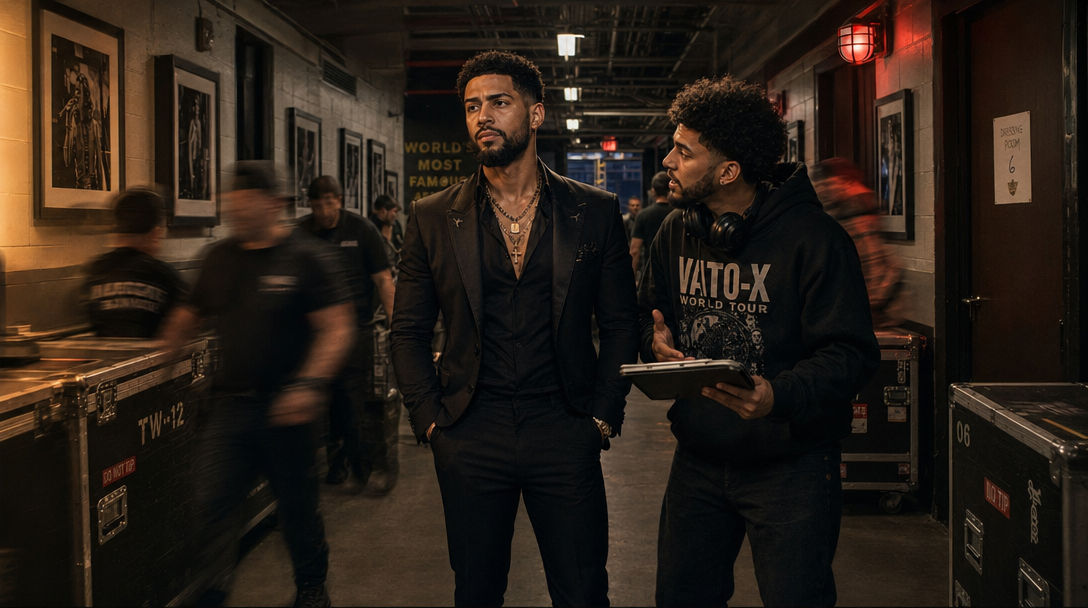
Thirty minutes to showtime at Madison Square Garden. The cables, the chants, the runway lights — and Vato-X, frozen, asks his oldest friend a question he cannot answer: am I good without the apparatus? Then a man Xavier never met, dead before he was born, walks into the corridor in a white guayabera and golden spirit-light. He smiles, extends his hand, and says: 'Déjame contarles una historia. Pero les advierto — esta historia cobra.' The play begins by collapsing time, and by warning the audience that this story will cost something.

Read scene
Vida en la Esquina — the barrio wakes
Act I · Scene 1

Vida en la Esquina — the barrio wakes

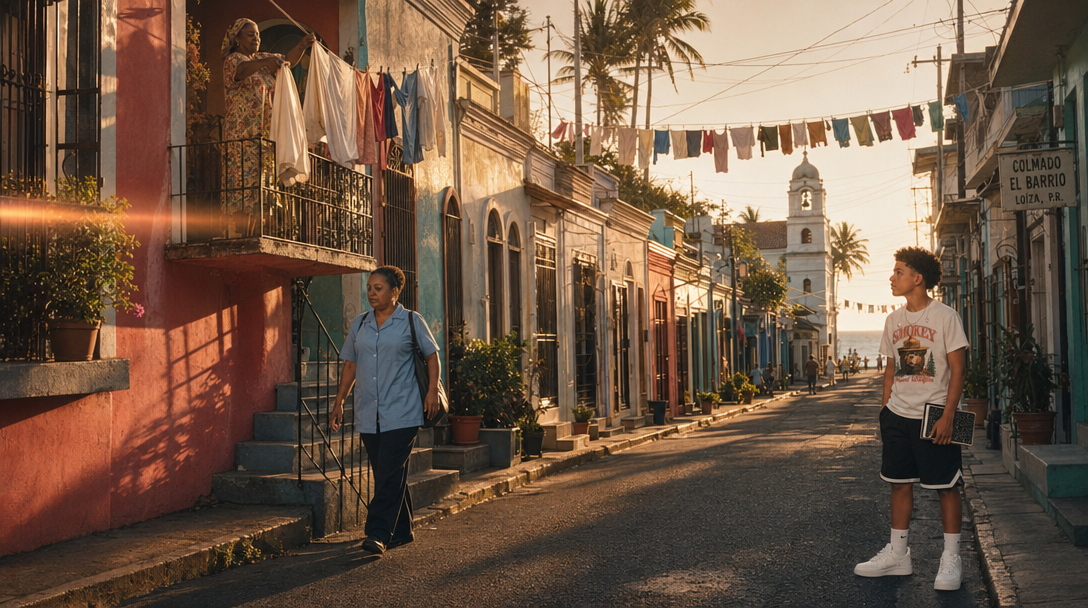
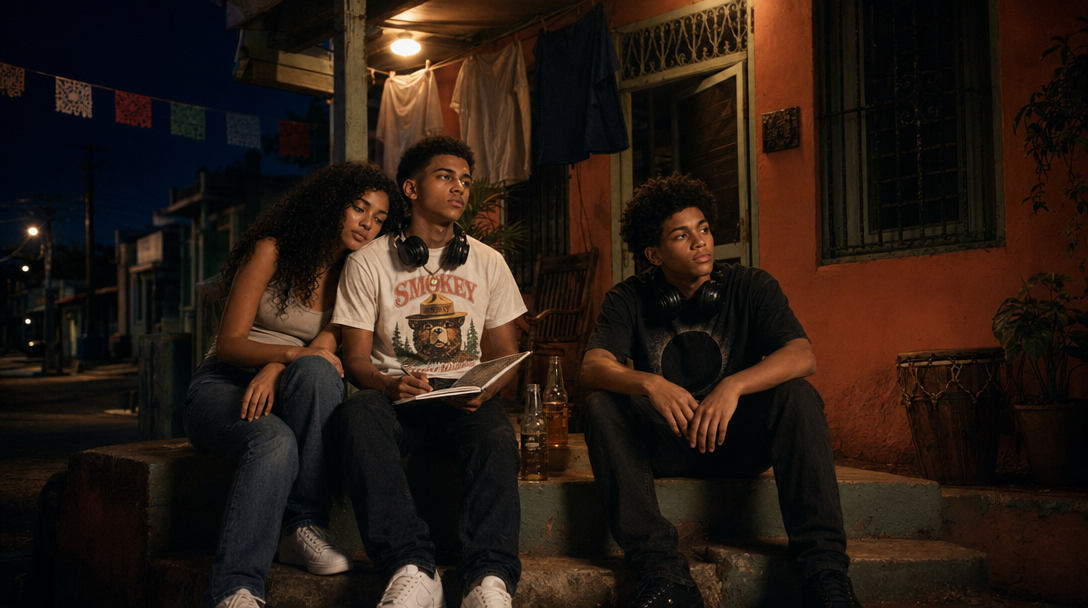
Loíza wakes. Radios braid into one song from open windows; laundry climbs to the line; Mamá Carmen leaves for the cleaning job that pays the rent. Within ninety seconds of her departure, Miguelito appears — shoulder-bumps past Xavier, surveys the block, and delivers the line that seeds the entire show: 'Todo tiene dueño. Y un día, to' esto va a ser mío.' The ownership threat is present from the first number. Sofia teaches the bomba step to a circle of barefoot kids while Javi captures it on a cassette that will become a beat. On a balcony above, Abuelita Rosa hums a melody — four notes, almost nothing, a muted clarinet shadowing her voice — that the audience will not consciously register until MSG. Twelve-year-old Xavier sits on a low concrete step, his libreta open on his knee, writing a song nobody has heard yet.

Read scene
La Bomba de Ángel — 1962 flashback
Act I · Scene 1.5

La Bomba de Ángel — 1962 flashback

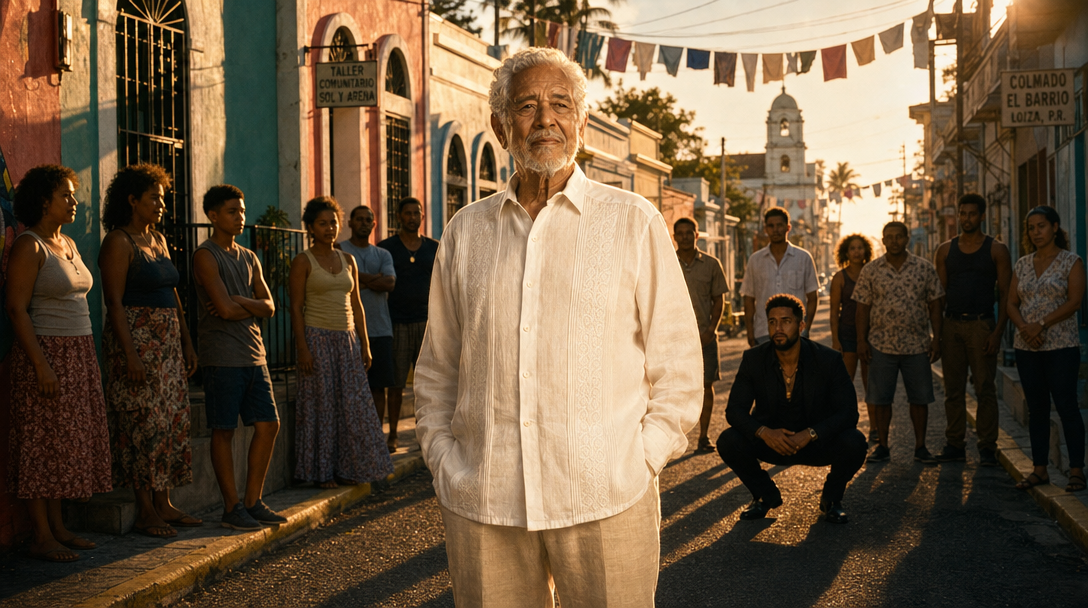
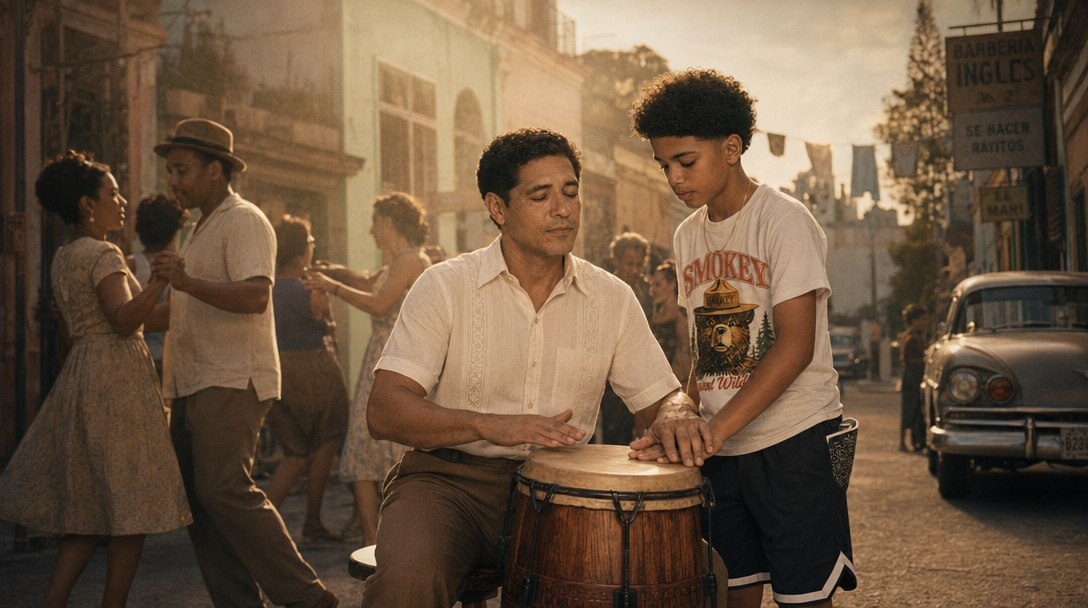
Time bends. We are in 1962, on the same Loíza street, but everything is dust-gold and impossible. A young man sits with a hand-carved barril between his knees and teaches a small boy a five-beat pattern — tun-tu-tun-pa, tun — that the boy will carry for the rest of his life. The young man is Abuelo Ángel. The boy will only ever meet him here, in a memory he cannot actually have.

Read scene
Mamá Carmen y el Sueñito — the promise
Act I · Scene 2

Mamá Carmen y el Sueñito — the promise

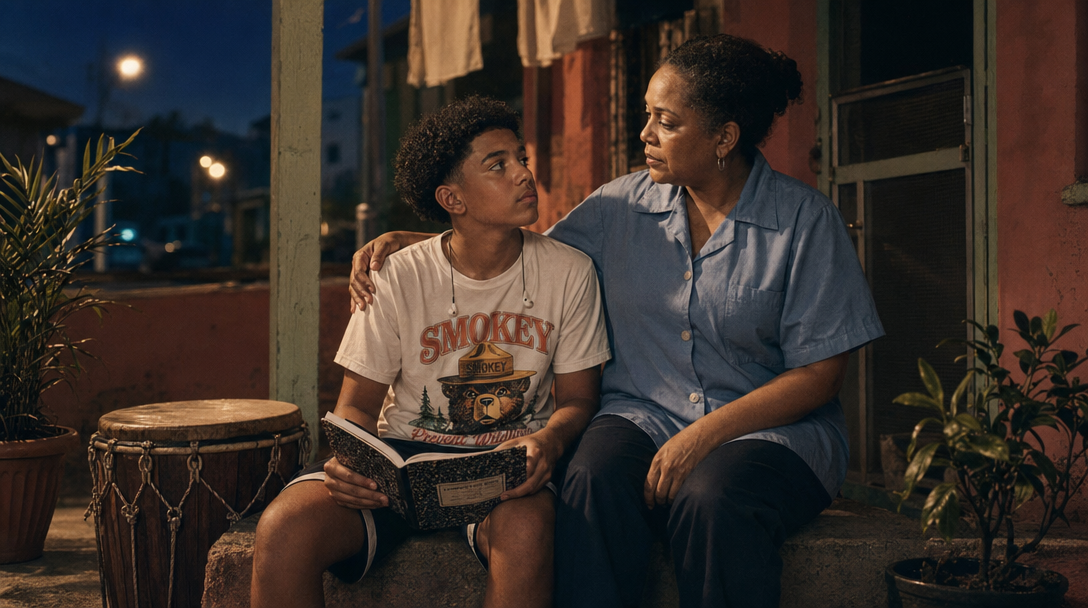
Mamá Carmen comes home from her shift in a uniform that has held the day in it. She sits beside her son on the front step, under one yellow streetlamp, and tells him that she used to have a voice — and then she proves it. Four bars. Raw, startlingly beautiful, the voice she put away when Xavier was born. She stops herself mid-phrase, as if the sound surprised her. Then silence — the silence that will hold until the dawn concert finale, when her first note will finish what she started here. She extracts a promise: that whatever the world makes of him, he will not forget who he is. The contract that holds every other scene in this play.

Read scene
Dieciséis Años — Luna and the corner
Act I · Scene 3

Dieciséis Años — Luna and the corner

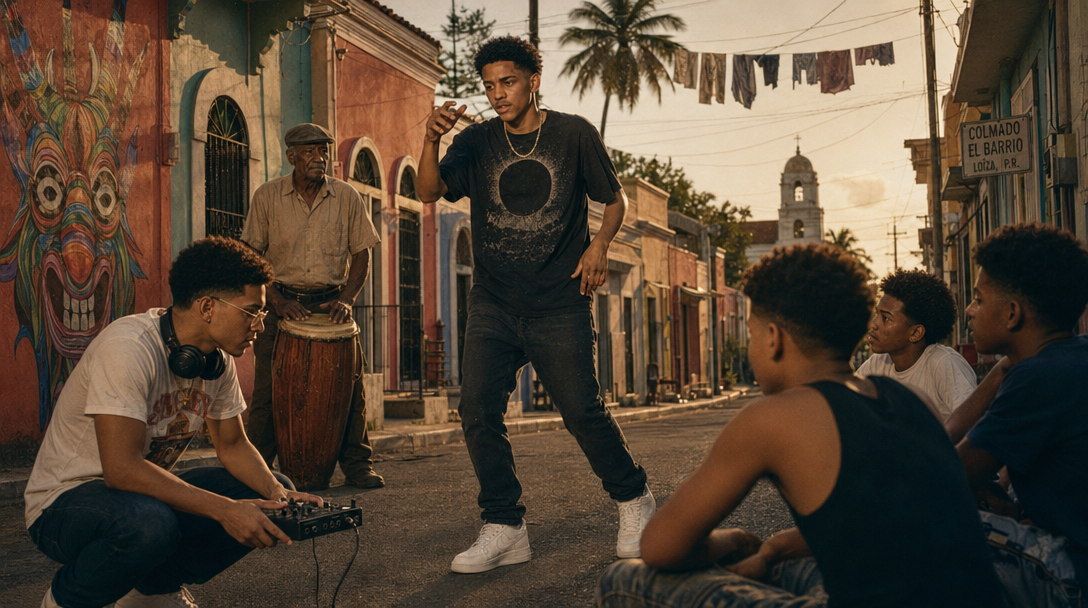
Four years on. Xavier is sixteen, freestyling for the kids on the corner with Javi at the mixer. A girl named Luna walks past with her schoolbooks, stops, turns back. She kisses him in the late-afternoon gold. Then Miguelito — the kid who chose the other path — appears, two older boys at his back. The stakes have just gotten older.

Read scene
La Plaza, Viernes en la Noche — first concert
Act I · Scene 4

La Plaza, Viernes en la Noche — first concert

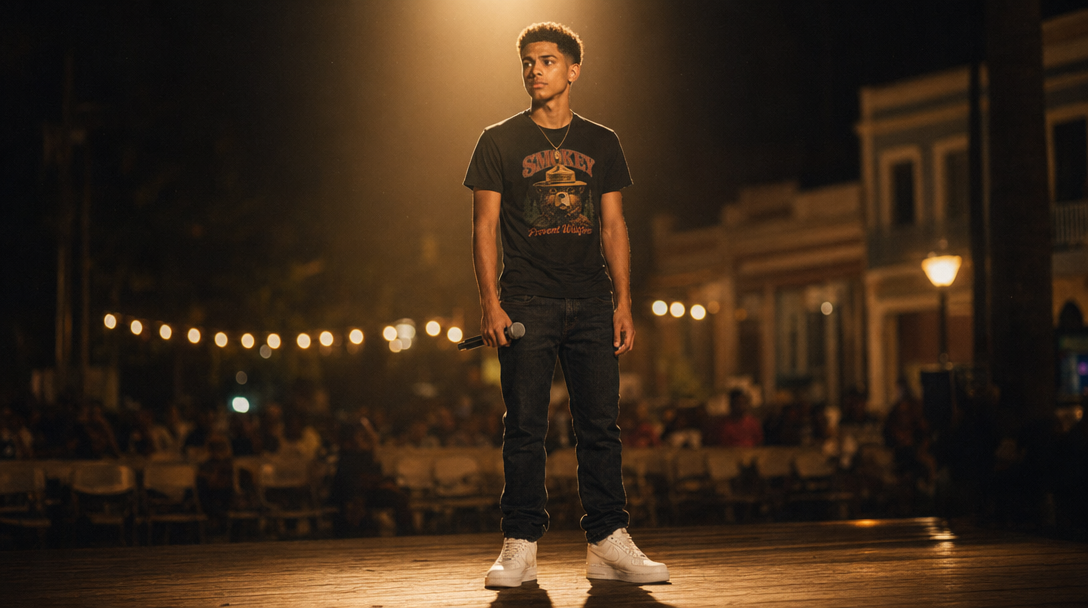
Friday night. The plaza is strung with cafe lights, the neighborhood is in folding chairs, and Xavier is paralyzed under a single warm spot. Sofia walks onto the stage, takes his arm, and taps the bomba pattern against his skin — tun-tu-tun-pa, tun — and his eyes open. The plaza erupts. Don Luis comes forward and places a hand-carved drum into his hands: Abuelo Ángel's barril. The night Vato-X is born — though no one has used the name yet.

Read scene
La Bomba de Abuelita — inherited memory
Act I · Scene 5

La Bomba de Abuelita — inherited memory

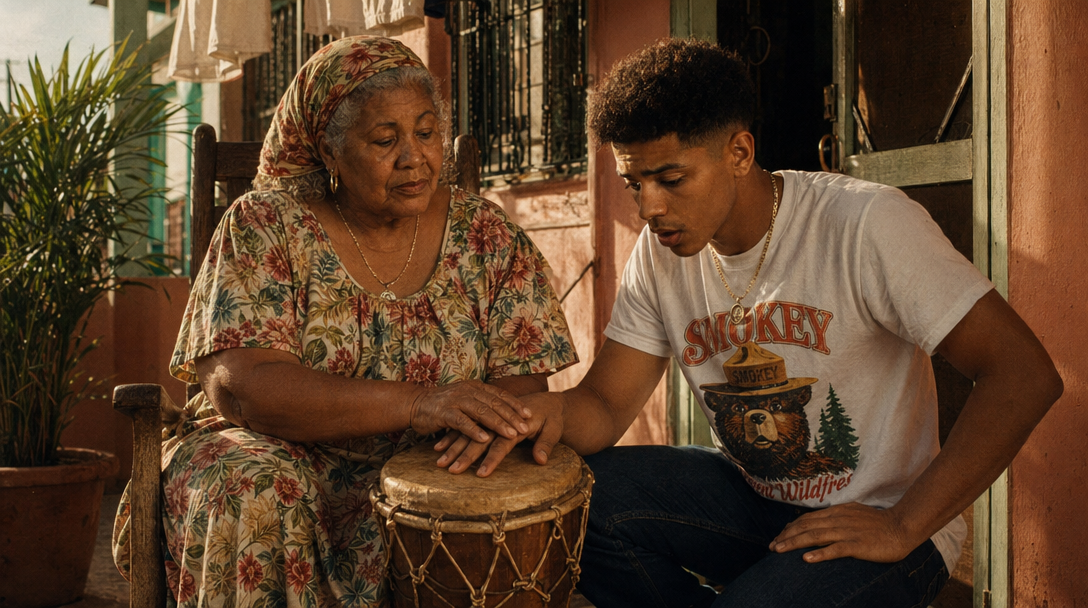
The next afternoon. Abuelita Rosa places Xavier's hand on the inherited drum and tells him she taught him the rhythm before he was born — into her belly, then into his cradle, then into the long quiet middle of his childhood. The hand, she tells him, remembers what the head forgets.

Read scene
El Viral — the moment everything changes
Act I · Scene 6

El Viral — the moment everything changes

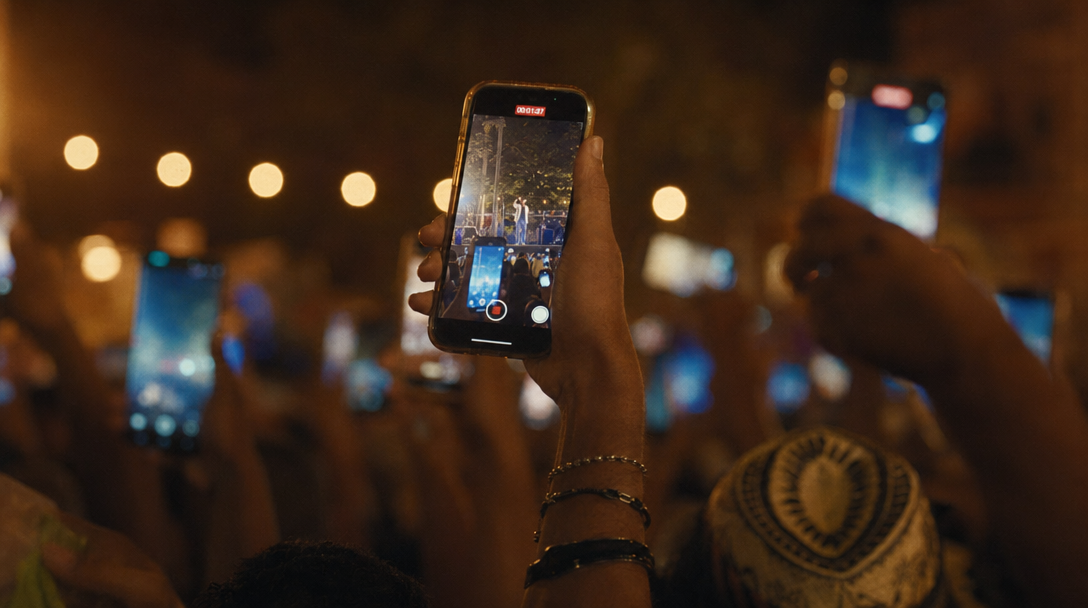
Phones in the plaza captured everything. Javi uploads the clip in the middle of the night and watches the view counter climb past one million while everyone he loves is asleep. By morning, the world has begun to claim Xavier. Then the lights shift. Abuelo Ángel steps into spirit-light downstage, visible only to the audience, and speaks: 'El mundo lo oyó. Pero el mundo no escucha como escucha un barril.' The world heard him — but the world doesn't listen the way a drum listens.

Read scene
La Noche Antes de Atlantic — the last night home
Act I · Scene 7

La Noche Antes de Atlantic — the last night home

The night before he flies to New York. Xavier, Sofia, and Javi sit on the front porch under one warm bulb, three sodas in hand, and try not to say what everyone in the silence already knows. Whatever this is — this triangle, this neighborhood, this version of any of them — ends tonight.

Read scene
Atlantic Records — El Mentor
Act I · Scene 8

Atlantic Records — El Mentor

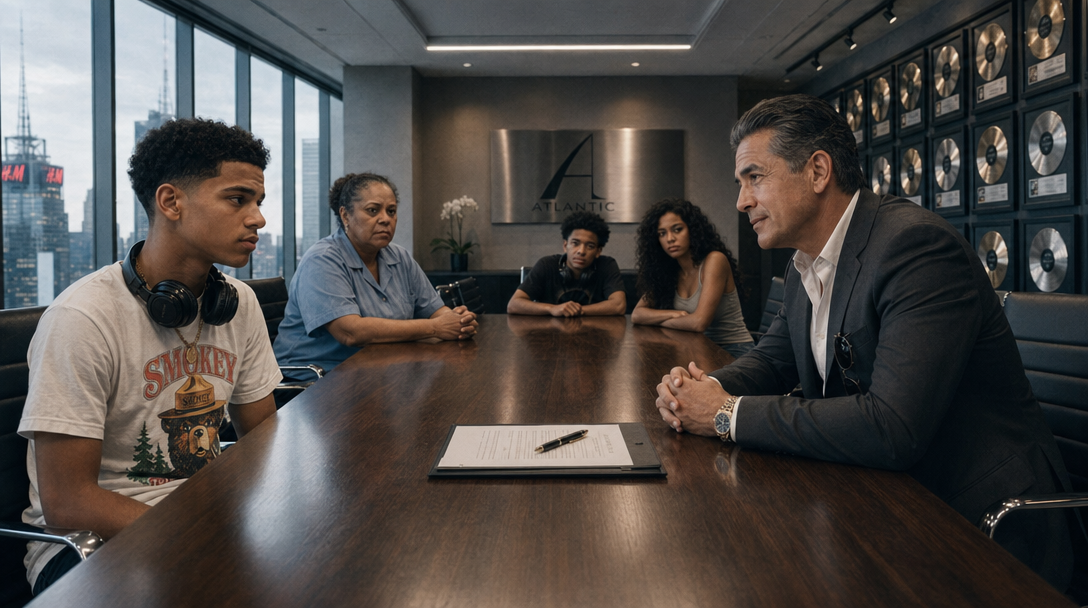
Atlantic Records, a polished walnut conference table, the Manhattan skyline behind glass. Ricardo Maldonado — a man who genuinely believes in the version of Xavier he is about to make — leans in with a contract and a name: Vato-X. The deal: three albums, 65/15/20 split, Javi reduced to assistant producer, Sofia relegated to the back ensemble. Mamá Carmen catches the math midway through. Xavier asks for a moment alone. Then a knock on the door changes the act.

Read scene
La Aparición del Padre / The Check
Act I · Scene 8.5

La Aparición del Padre / The Check

Before Xavier signs, an assistant knocks: a man at the front desk says he is your father. Tomás Vega — gone since Xavier was four — walks in wearing a button-down too tight at the shoulders and a rehearsed apology, and within a minute names what he came for: $5,000, between family. Javi at the threshold: 'hermano, no firmaste todavía. No tienes contrato. Lo que él te está adelantando sale del contrato. Estás firmando antes de firmar.' Xavier asks Ricardo for an advance against a deal he hasn't signed; Ricardo writes the check standing up and hands it to Xavier so Xavier has to do the handing. Tomás takes it and goes. Xavier whispers, to no one: 'soy exactamente como él.' Then he picks up the pen. The four-Xaviers tableau forms in the corners of the room as he signs.

Read scene
Abuelita Rosa, Act I, Scene 5
The hand remembers what the head forgets.
Abuelita Rosa · Act I, Scene 5
II

The cost of the world's listening
and the long way home.

11 scenes · approx. 75 minutes
La Gira del Mundo — tour montage
Act II · Scene 9

La Gira del Mundo — tour montage

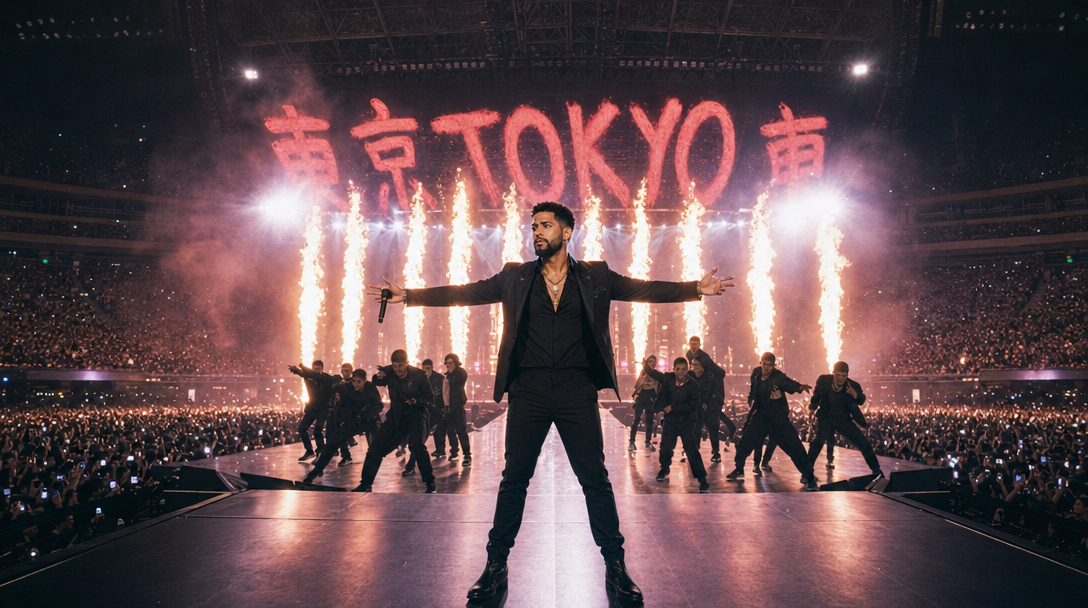
Eighteen months and eight cities compress into six minutes of pyrotechnics. San Juan, Miami, Mexico City, Madrid, Buenos Aires, Tokyo, London, the Garden. Vato-X sells out arenas while Sofia disappears from the dance line, Javi gets cut from sound, and Ricardo closes deals over Xavier's shoulder. The bigger the rooms, the smaller the boy. The bomba pattern degrades city by city: San Juan has the full live bomba; Miami replaces the barril with a drum-machine sample; Mexico City adds autotune to Xavier's voice; Madrid samples and chops the pattern into a loop; Tokyo retains only the bass hit; by MSG the bomba is unrecognizable. In Madrid, Xavier's libreta slips from his belt during a treadmill sequence — swept offstage by a tech, gone. He doesn't notice. At the midpoint, at maximum spectacle, Abuelo Ángel appears in spirit-light walking physically against the treadmill — moving in the opposite direction, invisible to Xavier, visible to the audience. He doesn't speak. The ancestor's rhythm was always there; the world just wasn't listening.

Read scene
La Llamada de Ricardo — the algorithm doesn't reward nostalgia
Act II · Scene 9.5

La Llamada de Ricardo — the algorithm doesn't reward nostalgia

A glass-walled office, somewhere between cities. Ricardo Maldonado, relaxed and confident, declines a Loíza cultural heritage festival invitation for Vato-X over the phone. Brand strategy, not malice. 'Hometown is where you come from. The brand is where you're going. If he goes back to a plaza in Loíza, it looks like regression. The algorithm doesn't reward nostalgia.' He hangs up. Takes a sip of coffee. Checks the next city on the tour schedule. The audience understands: the machine that built Vato-X is actively preventing Xavier from going home. The horror is that Ricardo is right — by every metric that matters to the industry, he is protecting his artist. That is the horror.

Read scene
La Suite Vacía — the empty hotel room
Act II · Scene 10

La Suite Vacía — the empty hotel room

A penthouse suite in Miami. Xavier alone with a trophy and a reflection in floor-to-ceiling glass. Before calling anyone, he scrolls his phone and stops — a news alert, a glossy rendering: CARIBBEAN DREAMS RESORT & CULTURAL CENTER. The plaza where he played his first concert is marked DEMOLITION ZONE — PHASE 1. He doesn't yet know his royalties are funding this. But he sees his origin point in the demolition zone, and the image stays on the screen as the phone lights up: Mamá Carmen on a video call, asking the only question he cannot answer — are you happy, mijo? He hangs up. The neon city keeps glowing as if nothing has happened.

Read scene
Mientras Tanto en Loíza — el barrio se erosiona
Act II · Scene 11

Mientras Tanto en Loíza — el barrio se erosiona

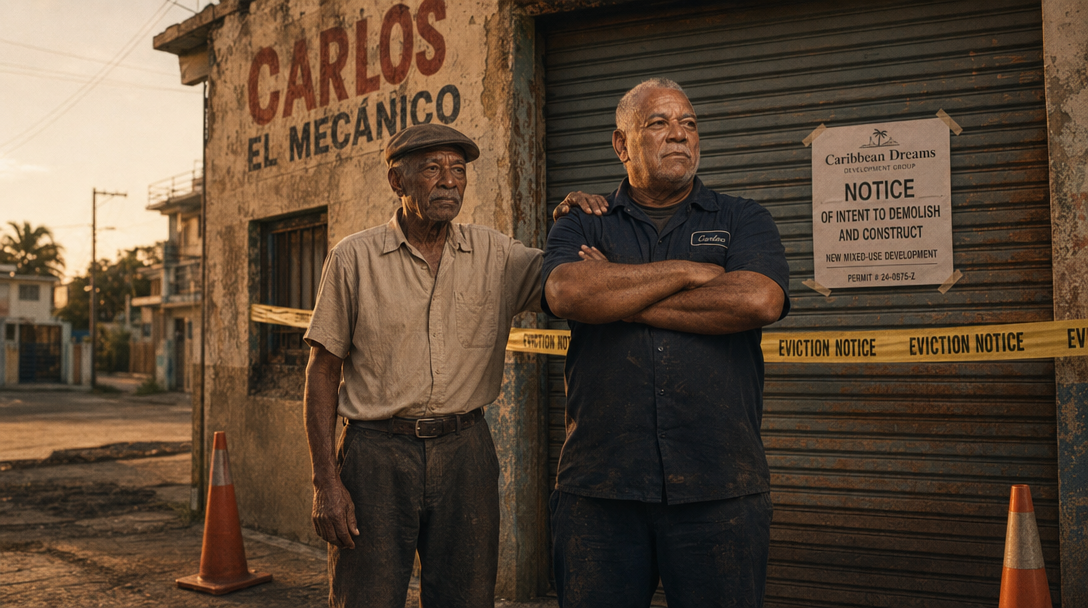
While Xavier tours, Loíza is being eaten. Construction notices appear on Carlos's mechanic shop. Yellow tape, surveyor's cones, the distant sound of diggers. Sofia is on Don Luis's stoop with Javi — visibly six months pregnant with his child. Don Luis brings the news: Caribbean Dreams gave Carlos thirty days; Mamá Carmen's house is bloque dos, six months. Sofia has texted Xavier three times this year, no reply; Javi six, with four late and two unread. Then Javi opens the laptop he has been quietly closing for two months and says it: he has found the offshore accounts. They need to fly to Miami. She says she's pregnant. He says: por eso. I need someone else in the room.

Read scene
La Investigación de Javi — Miami penthouse
Act II · Scene 12

La Investigación de Javi — Miami penthouse

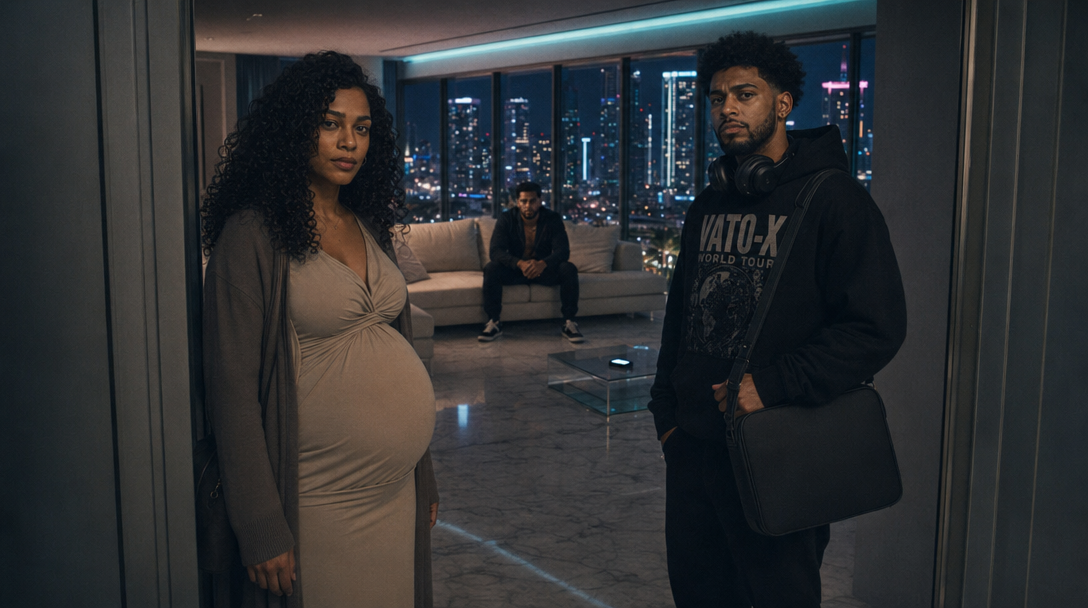
Three days later, Xavier's penthouse in Miami. Marble floors, a wall of awards, Karina in the bedroom. Xavier on the couch in workout clothes, scrolling — no libreta visible; it fell during the Madrid treadmill and he hasn't noticed. Javi and Sofia walk in unannounced — they called three times. Sofia is pregnant; the baby is Javi's. Xavier says 'okay.' Sofia says: that's not why we came. Javi sets a phone face-up on the coffee table and presses play. A press conference video pans behind Miguelito at the podium — five seconds of silence. The audience finds Tomás Vega in a hard hat in the deep background before Xavier names him. The participatory discovery is more devastating than narration. Then Javi names what he has spent two months proving, and the LED screens that displayed the Vato-X brand now project the paper trail: Panama corporate filings (Island Music Holdings), Cayman Islands LLC (Pacific Overseas), bank wire transfers (Atlantic → Island Music → Coastal Capital), real estate filing (Coastal Capital as principal investor in Caribbean Dreams), construction crew payroll showing Tomás Vega. The same technology serves both purposes. Karina emerges from the bedroom in a hotel robe, sees Sofia's belly, and quietly closes the door behind her — the only honest exit in the room. Before the scene ends, Javi reaches into his bag and sets Xavier's worn libreta on the coffee table — he found it backstage at the Madrid venue two months ago. Xavier picks it up, opens it, and hums a melody he wrote when he was twelve. He doesn't know it yet, but it is the LLEVO chorus. Xavier calls his mother on speakerphone: I know about the house. She says: hijo, eso no es ser dueño, eso es ser usado. Lights dim. Abuelo Ángel steps into spirit-light: 'Ahora ustedes saben lo que sabe mi nieto. La pregunta es qué va a hacer con eso.'

Read scene
Madison Square Garden — Sin Máquinas
Act II · Scene 13

Madison Square Garden — Sin Máquinas

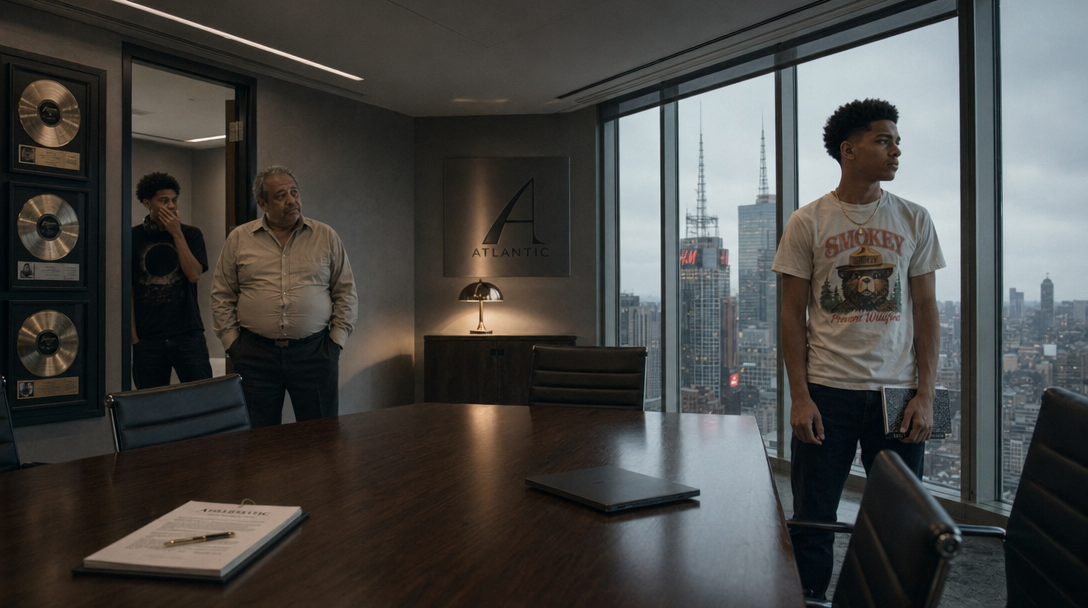
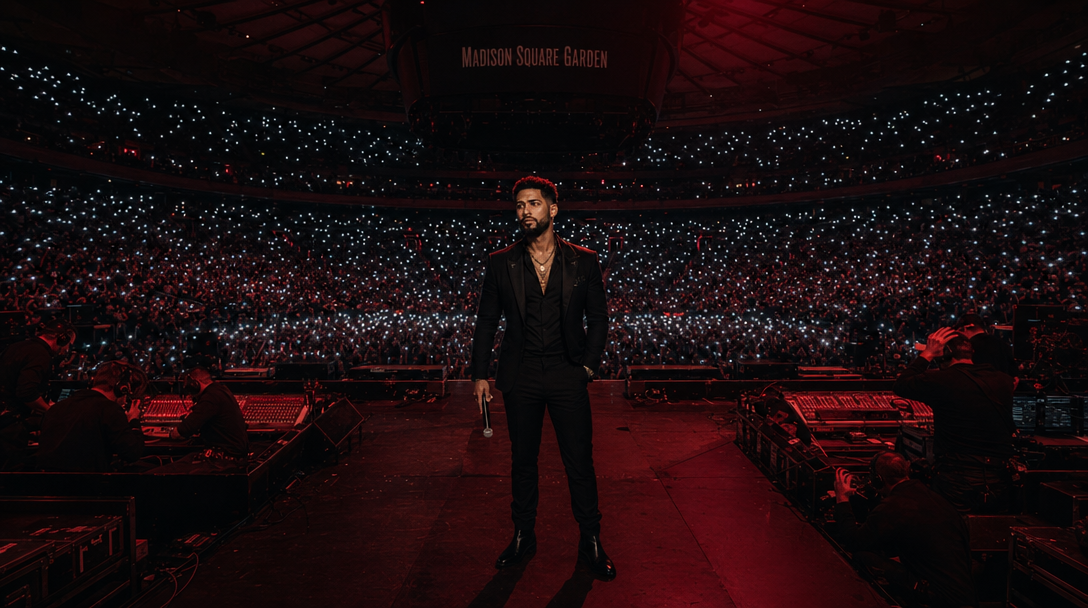
Twenty-five minutes to showtime at Madison Square Garden. Half the speakers go dead, the consoles spark, the playback rig reads as locked — not crashed. Atlantic tour control in Miami has the key. Ricardo walks the corridor on a phone call: 'No cancellation. No refunds. Protect the brand.' Three days earlier Javi had handed Xavier a folder showing his royalties moving Atlantic → Coastal Capital Partners → Caribbean Dreams, the gentrification project demolishing his own block; the same folder showed Xavier's father in a hard hat behind Miguelito at a press conference. Now Ricardo names the rest of it: in the Atlantic-Universal merger Xavier signed three years ago without reading, his masters and publishing were assigned away — the catalog isn't his. The price of the playback rig coming back on is a set list with no Loíza in it. Before walking onstage, Xavier turns to the audience — not to Javi, not to Ricardo — and asks the Prologue question directly: '¿Soy bueno? Sin autotune. Sin pirotecnia. Sin backing tracks. Sin las máquinas.' The full question returns with everything on the line. Xavier picks up a single wired mic, asks Javi for the digitized cassette of Don Luis's barril from 2003, and walks onstage with one cable, the libreta from when he was twelve, and his grandfather's rhythm.

Read scene
La Verdad En Vivo — the livestream
Act II · Scene 14

La Verdad En Vivo — the livestream

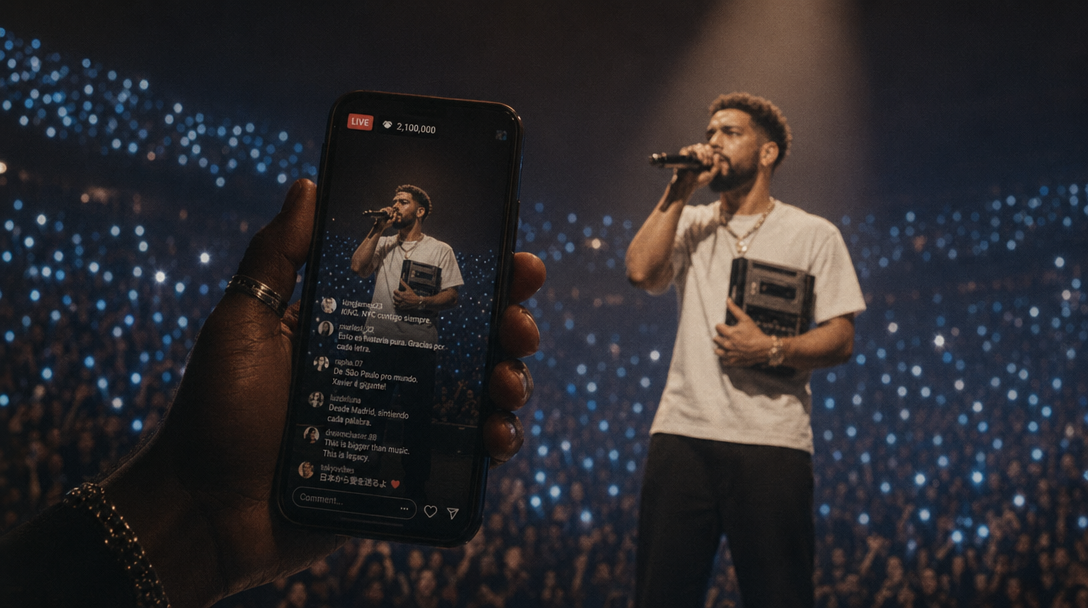
Still onstage. Javi pushes the livestream out through every channel he can reach — the WhatsApp group of Loíza, the Facebook of María la Panadera, twelve Pentecostal church prayer chains, the official VATO-X channel with its twelve million followers. Atlantic's lawyers take it down on YouTube; for every takedown three mirrors come up. The view counter passes four million in an hour. Between verses, Xavier names the Atlantic-Universal catalog assignment, names Coastal Capital Partners, names Caribbean Dreams. Then, into a wired mic in front of twenty thousand people in MSG and four million online, he says: my abuela's porch is why this room knows my name; tomorrow at dawn the bulldozers reach my mother's block; I'm not going to be on this stage when they get there. The show is moving. If you want the real concert, follow the livestream. We are going home.

Read scene
Volar Sin Alas — the flight home
Act II · Scene 15

Volar Sin Alas — the flight home

Xavier on a 6 AM flight from JFK to San Juan. The libreta open on his lap. He is writing again. Below the wing, the Caribbean opens up — all the world he was chasing dissolved, all the world he was chasing arriving. He lands. He walks the Loíza streets in a plain white t-shirt and the libreta from when he was twelve. He kneels at his grandmother's feet on the front porch with the barril between them and weeps. Abuelita Rosa puts a hand on his head. The hand still remembers.

Read scene
La Movilización — 3:47 AM
Act II · Scene 16

La Movilización — 3:47 AM

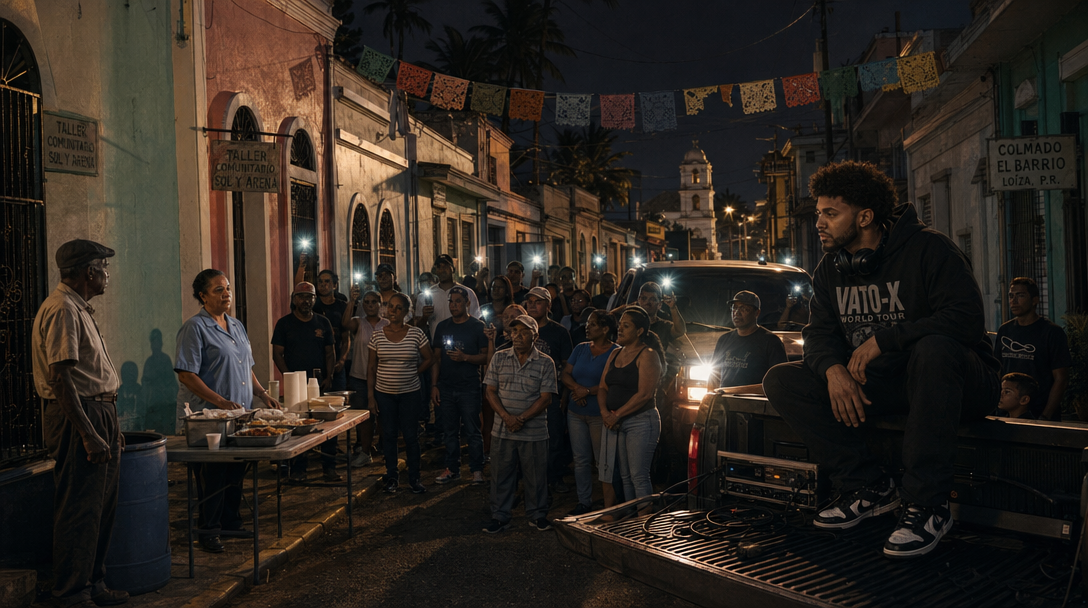
Three forty-seven in the morning. The Loíza streets light up not with stadium lasers but with porch lamps, phone flashlights, and the headlights of pickup trucks. The diaspora is online — NYC, Orlando, Chicago — pushing the livestream of MSG into every phone in the neighborhood. Mamá Carmen runs the food. Don Luis runs the drums. Javi runs the signal. Tomás — the father who took the check — picks up a hammer instead of a wrecking bar and joins the construction workers refusing to demolish the block. The community organizes its own dawn concert, permits suspended pending an investigation into Atlantic's contract with Caribbean Dreams Development. The barrio is mobilizing.

Read scene
Amanecer — el concierto del barrio
Act II · Scene 17

Amanecer — el concierto del barrio

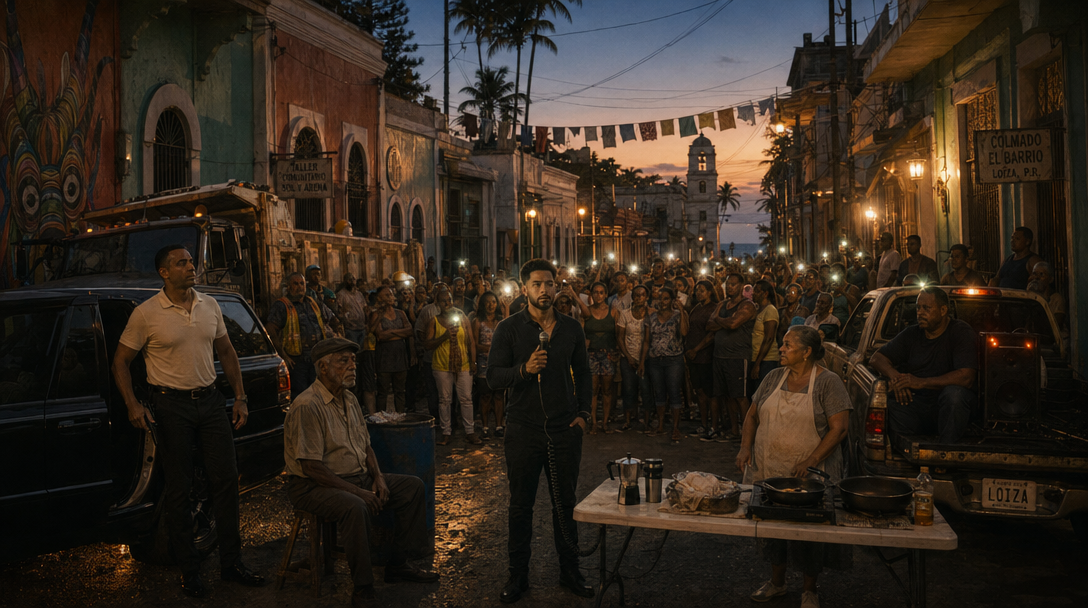
5:58 AM. The construction crew arrives at the edge of the street — three trucks, a flatbed with a backhoe, six workers, Miguelito stepping out of a black SUV in a polo shirt. The barrio is gathered between Miguelito's crew and Carlos's pickup. There is no stage. Xavier is in the middle of the crowd, wired mic in hand. Miguelito gives them thirty minutes. His phone buzzes — Coastal Capital, the investor call. He stares at the screen. He doesn't answer. Pass the mic: Mamá Carmen sings for the first time in the show — the voice she put away. Her first note is the same note she sang in Scene 2, and the audience recognizes it. She is finishing what she started sixteen years ago. Abuelita Rosa, refusing to come down from her balcony, sings from above. Javi takes a verse. A neighbor holds up a phone with Sofia on FaceTime from New York; her livestream audio takes a verse from her apartment couch. Tomás, just arrived at the curb, takes the hard hat and the construction vest off, sets them on the hood of his truck, walks into the crowd, and takes a half-verse: 'I am still late · but I am here.' A barrio child takes the mic last and delivers the show's thesis in three lines. Miguelito, on the edge by his SUV, asks Xavier: '¿Qué hubiera pasado si yo cantaba?' — what would have happened if I'd been the one who sang? His line reframes the entire show's thesis: the path you don't take haunts the path you do. He walks back to his SUV slower than he came. The audience can't tell if he's changed. Neither can he. Xavier kneels in the middle of the crowd. Don Luis hands him the small barril. He plays.

Read scene
Finale Ultimo — la mano se acuerda
Act II · Scene 18

Finale Ultimo — la mano se acuerda

Sun fully over the rooftops. Abuelo Ángel steps from spirit-light into full light — visible to the audience, not to the characters — and tells them the truth before the integration. Not everything is saved. Tomorrow Atlantic sues. Tomorrow Tomás needs another job. Tomorrow Miguelito loses his investor call — maybe the contract. Tomorrow Sofia gives birth in New York, not Loíza. Tomorrow Xavier wakes up owning nothing and everything. 'Mañana no se salvó todo. Pero esta noche — esta mañana — el barrio cantó. Y la mano se acordó.' Then, and only then, the four-Xaviers tableau forms one final time — Niño/El Oído, Teen/El Hambre, VATO-X/La Máquina, Xavier/El Hombre — speaks in turn, and steps into one body. The integration is the last theatrical event, not the monologue. Xavier kneels in the middle of the crowd, takes Don Luis's small barril, and plays tun-tu-tun-pa, tun. La mano se acuerda, returning across two acts of stage time and sixteen years of story time. Mamá Carmen kneels next to him, puts a hand on his shoulder, and speaks the show's last line: 'Nunca pa' tras, mijo. Siempre pa' lante.' Abuelo Ángel fades — not with stagecraft, with light, the way a memory fades when you stop holding it. The barril keeps playing. Blackout.

Read scene
Who are you when the lights, money, fame, and machinery disappear?
The Central Question · Act II, Scene 13