Who are you when the lights, money, fame, and machinery disappear?
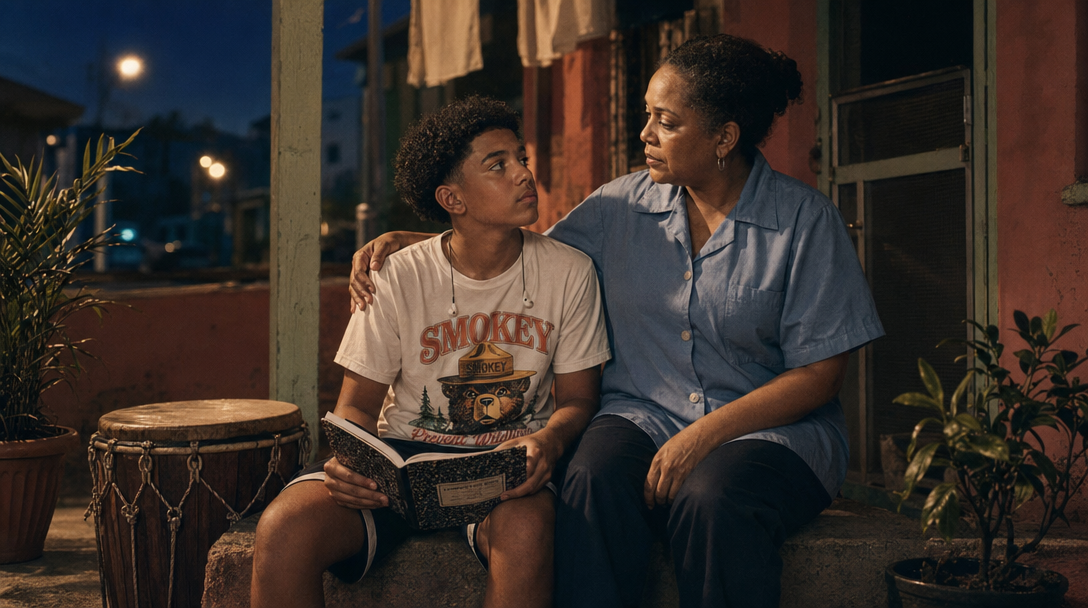
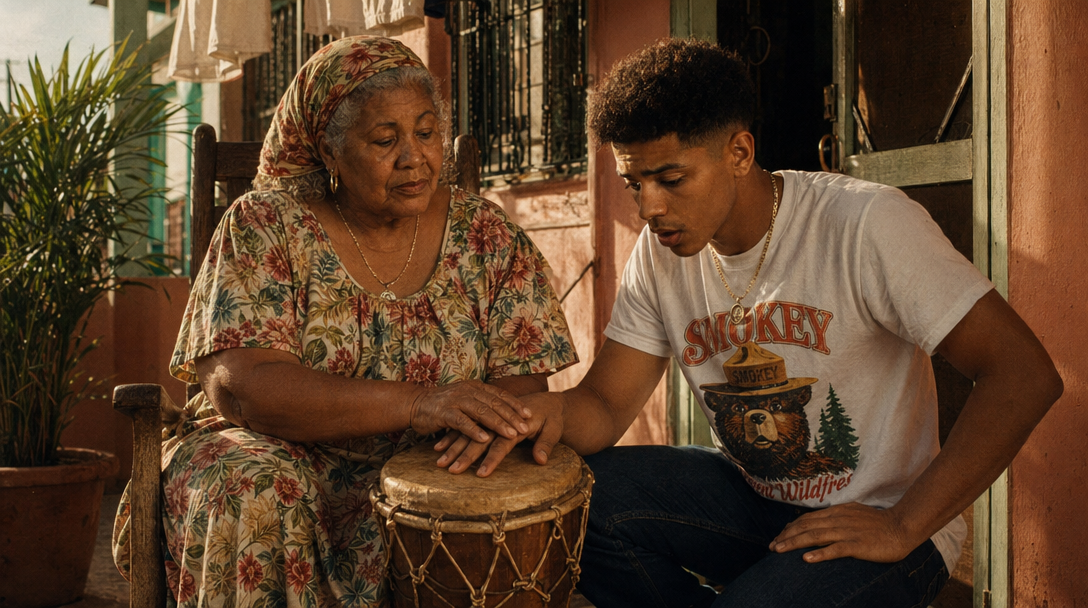
A boy carries a bomba rhythm from his grandmother's balcony to Madison Square Garden. His success funds the demolition of the street that made him — and he doesn't know it until the machines are already in motion. VATO-X is the Broadway musical about what happens when the artist chooses the source over the machinery.
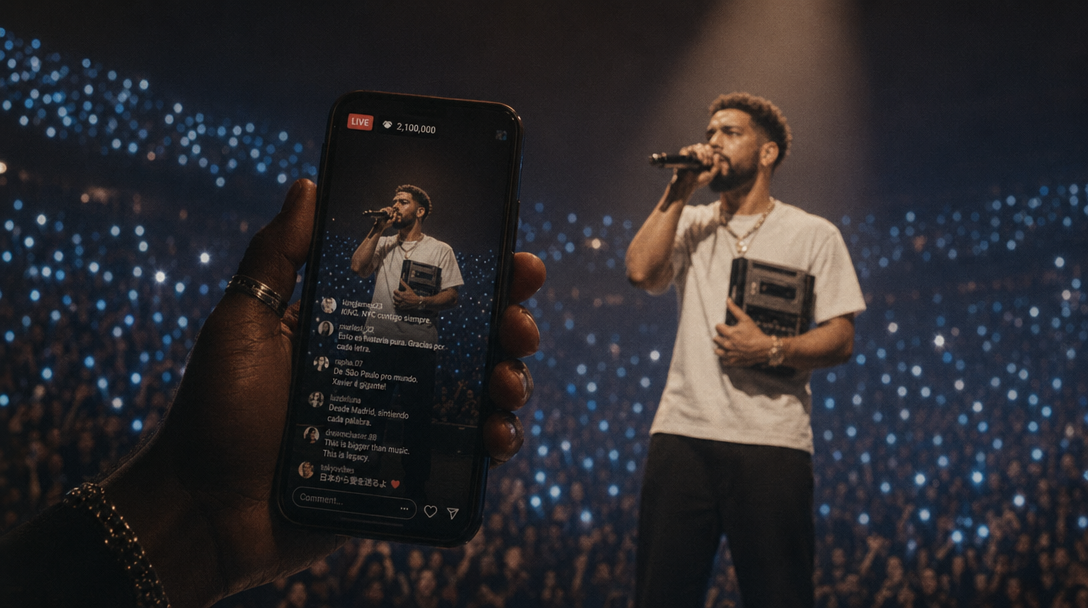
VATO-X is a two-act Broadway musical about Xavier Rosario Figueroa, a kid from Loíza, Puerto Rico who carries a bomba pattern — tun-tu-tun-pa, tun — from his grandmother's balcony to the floor of Madison Square Garden, and back home again. Across three timelines — the Loíza of now, the Loíza of 1962, and the global tour Xavier folds himself into — the show traces how Puerto Rican roots became the global beat, and what it costs an artist to learn the song was never his alone. Seven years into the Vato-X persona, Xavier discovers two things on the same night: in the Atlantic-Universal merger he signed without reading, his masters and publishing were assigned away — he doesn't own his own catalog; and his royalties have been quietly routed through Coastal Capital Partners into Caribbean Dreams, the gentrification project tearing down his mother's block, where his estranged father swings a hammer for a paycheck. Thirty minutes before MSG showtime, Atlantic remote-locks his playback rig as brand insurance against an artist gone off-script. Xavier walks out with one wired mic and a recording of his grandfather's barril, sings the show's anthem acoustic to twenty thousand people, names the contract clause and the development on a livestream that hits 4 million witnesses, and announces he is moving the show home. By 6 AM, in a permits-suspended dawn concert in Loíza, the barrio sings the anthem back to him verse by verse — and the world finally hears the source, not because Xavier sold it, but because he came home and brought the rhythm with him.